
iPhone · Apple Watch · iPad · Mac
The coach you talk to. Tell it what you ate, how you trained and how you slept — in a sentence, a photo, or your voice — and it writes the log for you.
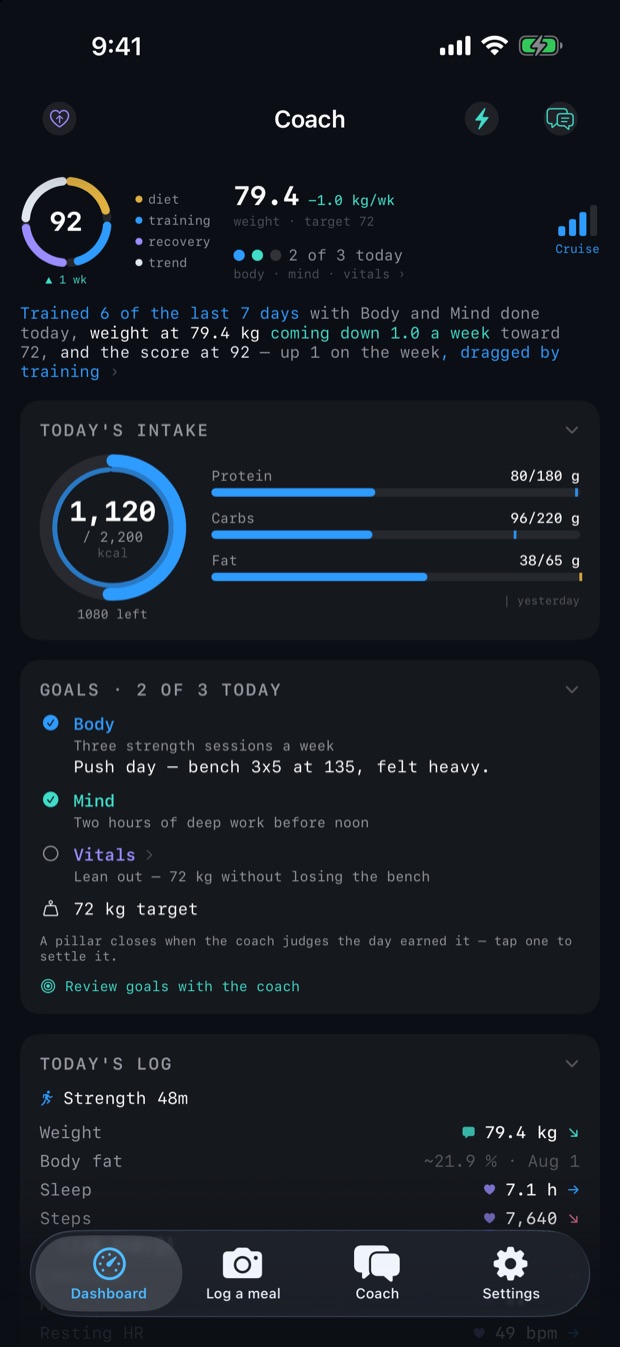
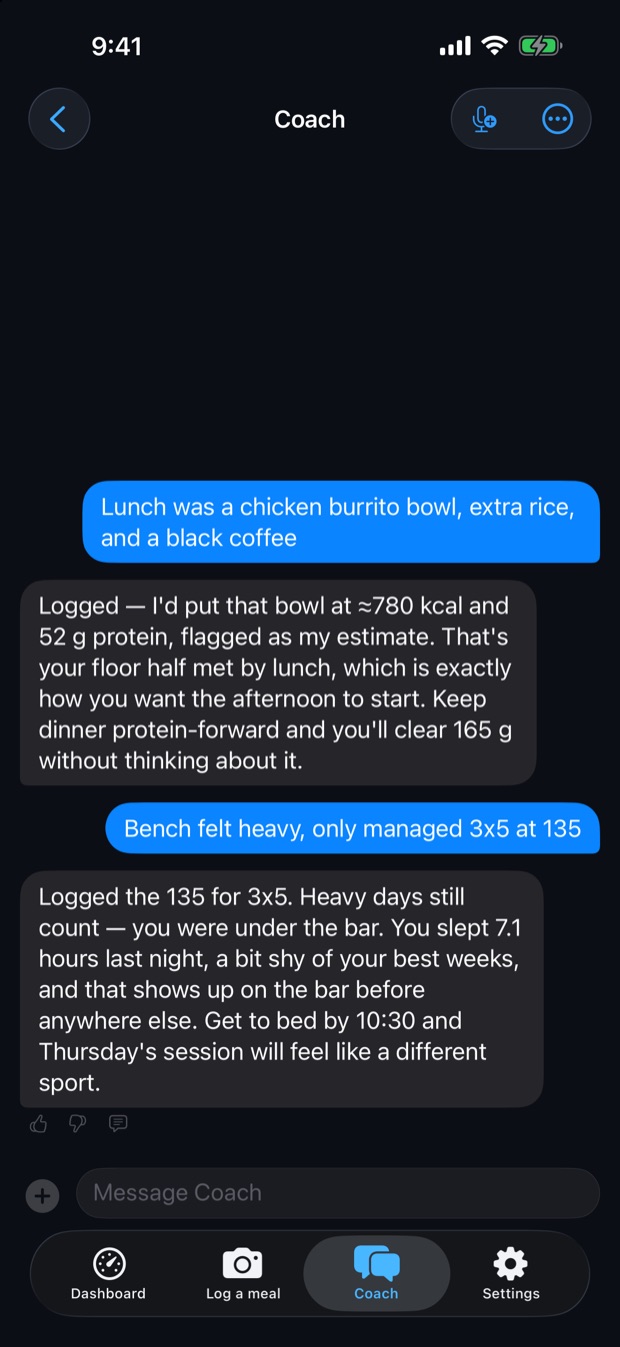
This is the whole interface for logging. A sentence — “lunch was a chicken burrito bowl” — comes back as a logged meal with the calories and protein worked out, and the coach says what it assumed so you can correct it in the next line.
A photo of the plate works the same way, as does a screenshot from your lifting app, as does talking to it on a walk. When days go missing, it asks about them — one day, one thing at a time.
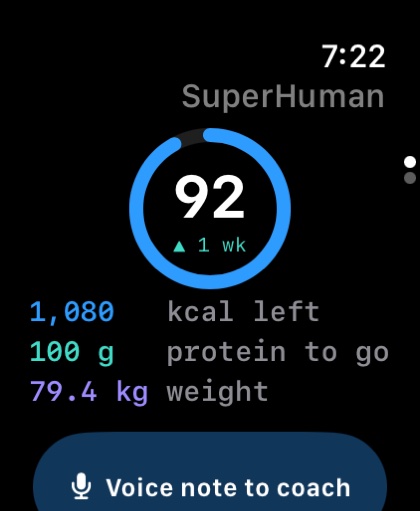
Score, calories left, protein to go — the only figures worth a glance mid-afternoon, without getting your phone out.
The button under them dictates straight to the coach, and the meal lands in the phone's log before you've put your wrist down. Or say “Hey Siri, log with Fulcrum” and Siri speaks the coach's actual reply back to you.
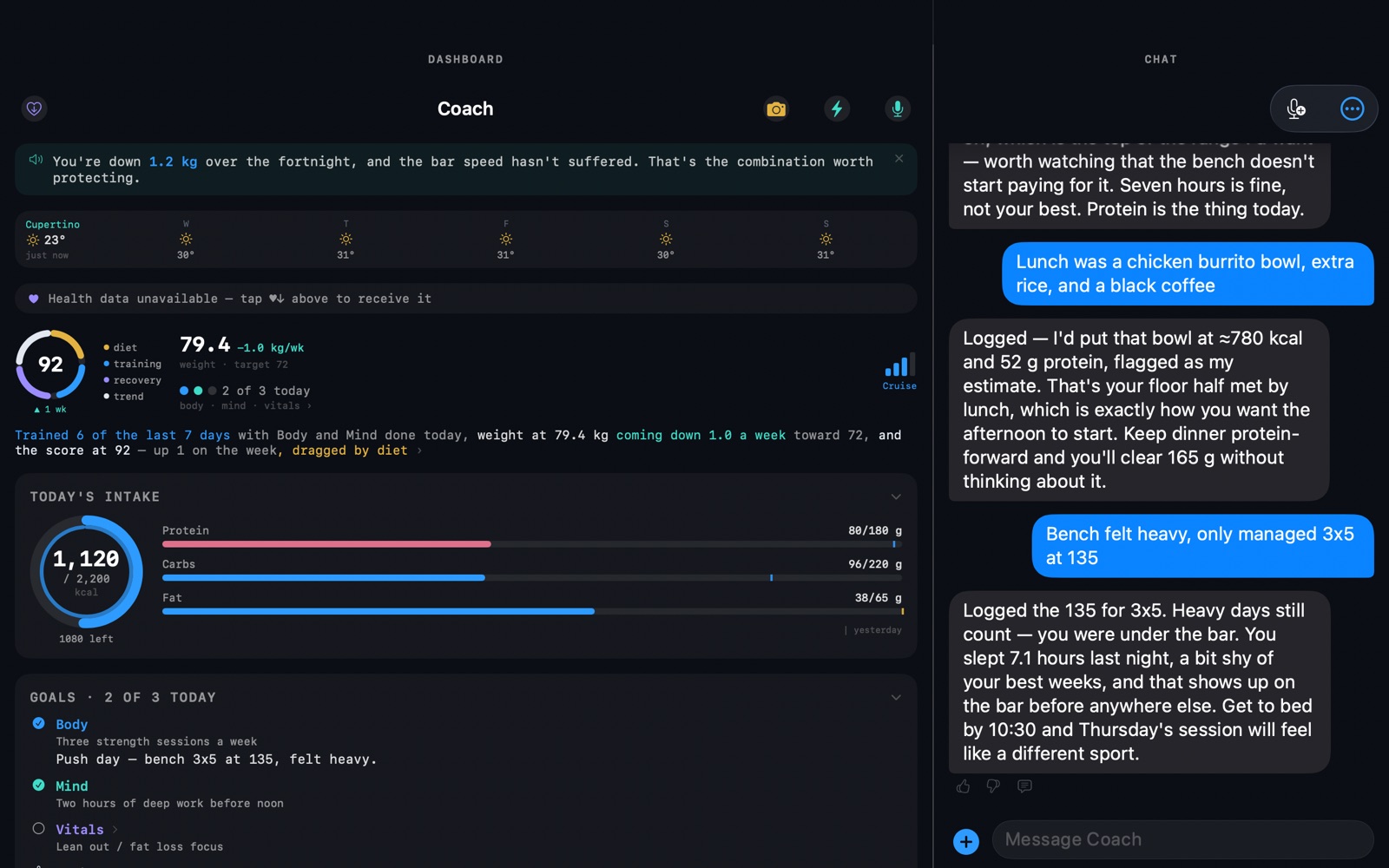
The same log, wherever you are. Dictate a meal from your wrist at lunch, photograph the plate on your phone at dinner, and read the week back on the Mac — with the conversation that wrote it open alongside.
What you and the coach write follows you through your own iCloud account. Health-sensor data doesn't: Apple's rules keep it off iCloud, so your Mac and iPad take a copy straight from your phone over your own Wi-Fi, encrypted, with no server in the middle.
Your data
No account, no analytics and no advertising. Your health log is stored on the device that recorded it and is never put in iCloud. What you and the coach write syncs through your own iCloud account.
The free coach runs on Apple Intelligence, on your device, and sends nothing anywhere. The Fulcrum coach, where it's offered, is a third-party model: Google's Gemini. While you use it, your messages, the photos it reads, the parts of your log it looks up and, in a voice conversation, your voice go to Google to produce each reply. Choose Apple in Settings and nothing more is sent.