

macOS
Runs a small company off a folder of plain markdown and CSV — the folder is the database.
Private beta
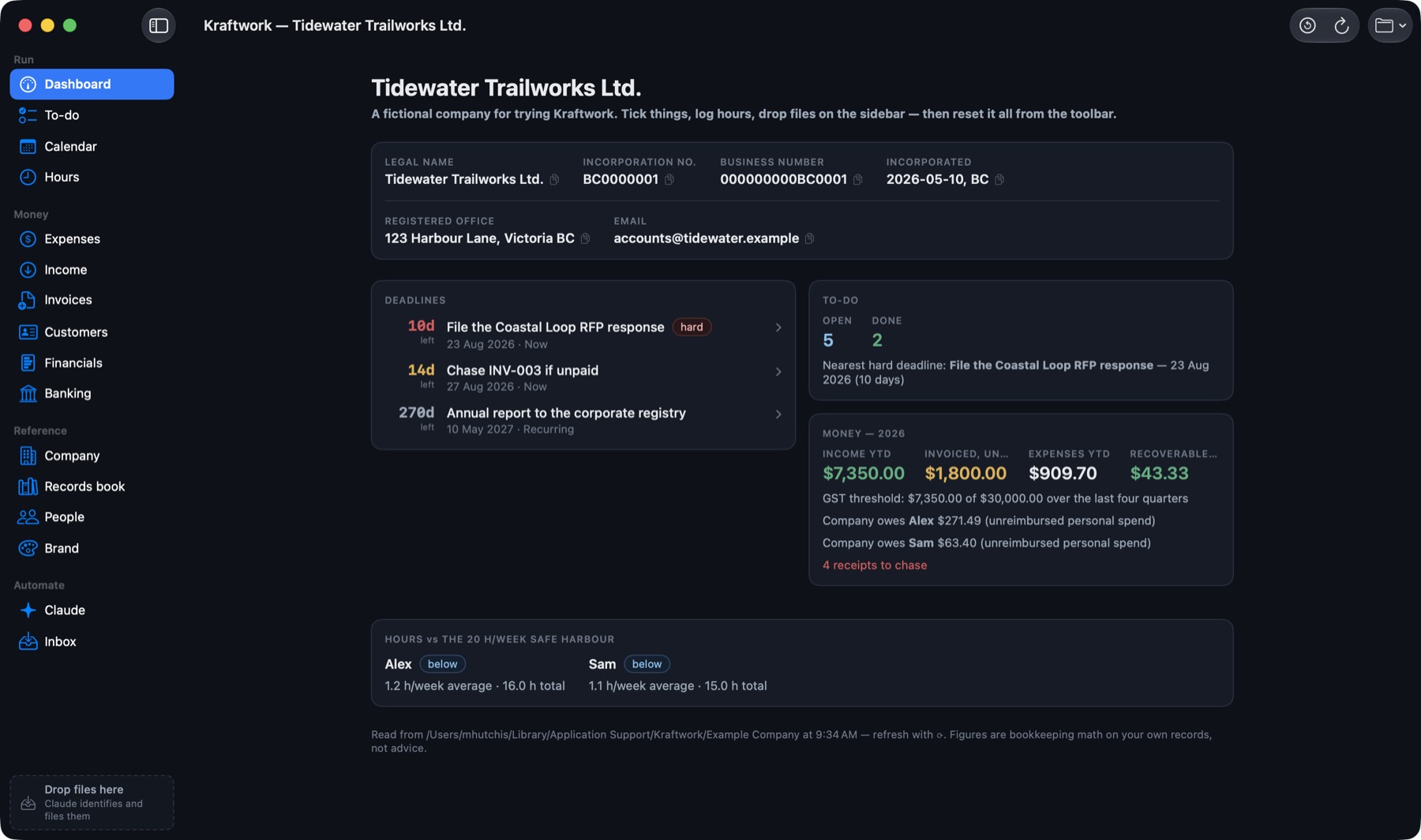
Hours, expenses, invoicing, banking, and the statutory records a corporation has to keep — in files you could still open if the app vanished tomorrow.
Everything shown here is the example company that ships with the app.
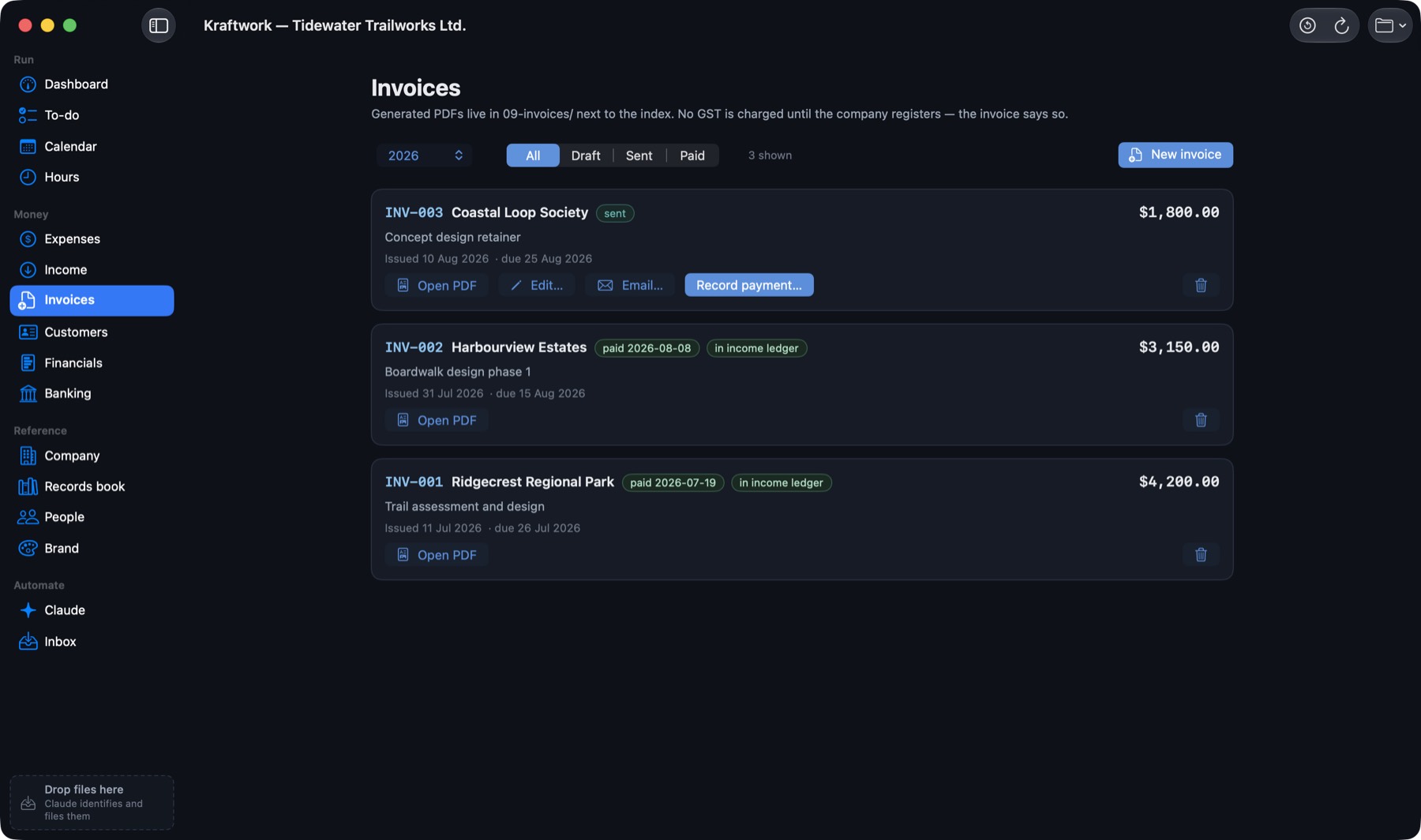
Generates the PDF, carries the legal name and incorporation number, and emails it with the covering letter written. A draft becomes sent when it actually sends, and a paid one links through to the row it created in the income ledger.
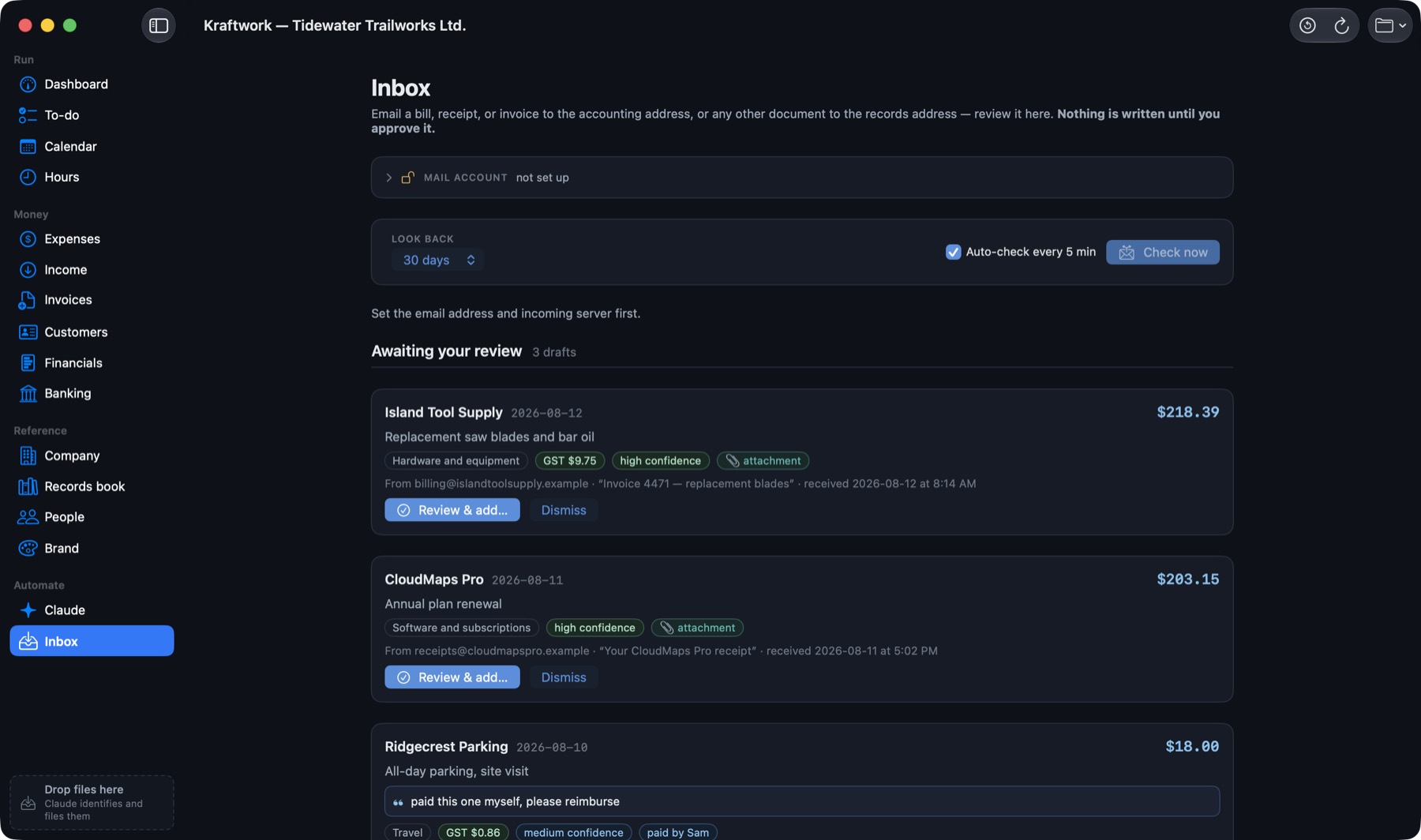
Forward a receipt to the accounting address. The figures are extracted, the PDF filed under the right fiscal year — and then it stops. Nothing reaches the ledger until you approve it.
Each draft shows what was read and how sure it is, so a bad guess is obvious before it becomes a row.
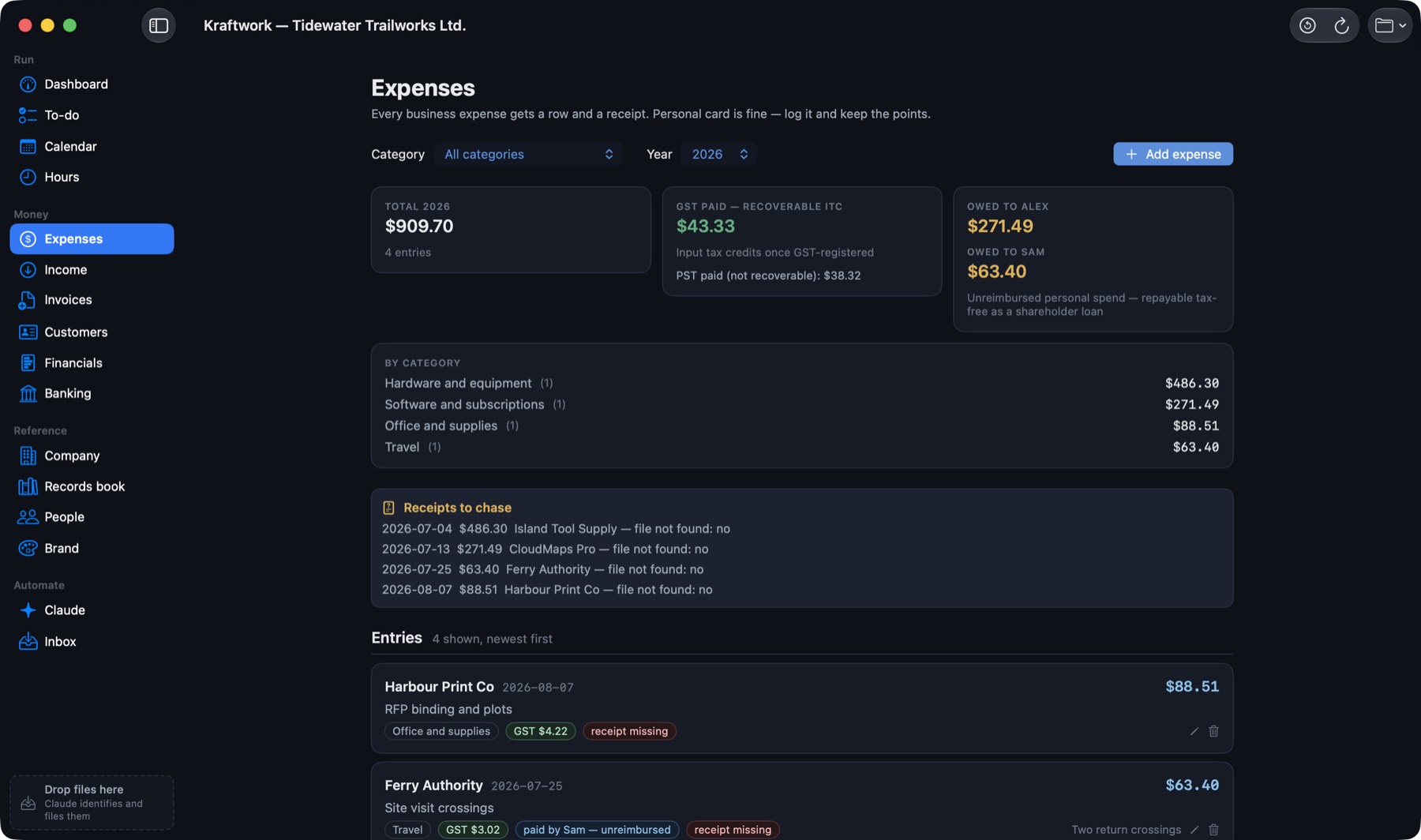
Totals by category, with the GST you can recover kept apart from the PST you can't, and what the company owes each shareholder for spend on a personal card.
Missing receipts are listed while you can still find them, rather than at year end.
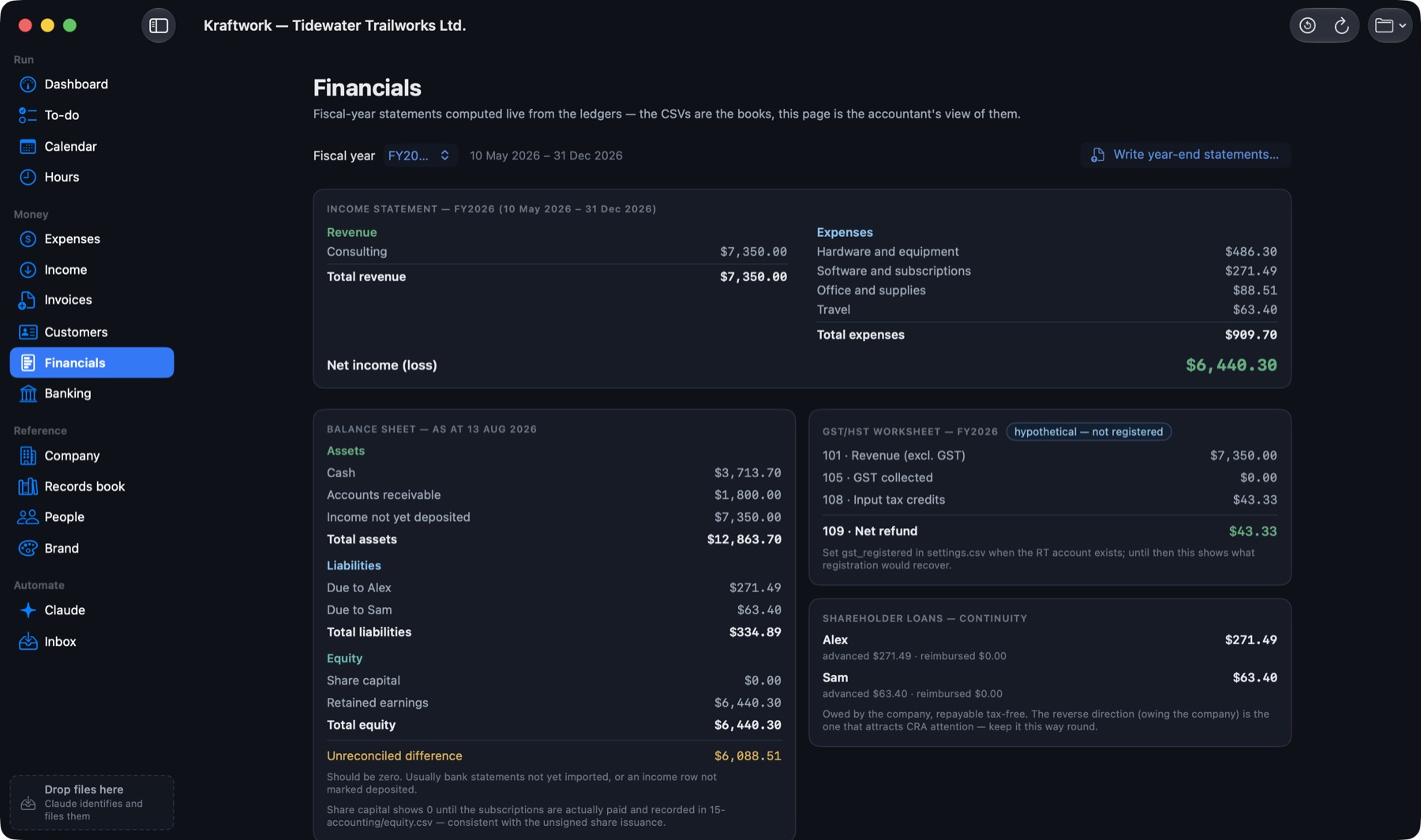
Income statement, balance sheet, GST worksheet and shareholder-loan continuity, computed live from the ledgers. The CSVs are the books; this is the accountant's view of them, and it renders to a file you can hand over.
Claude Code, inside the app
"Summarise what's still open." "Add two hours of admin to today." "Draft the transparency register from the template." It works on the records folder directly — the same files you can open yourself.
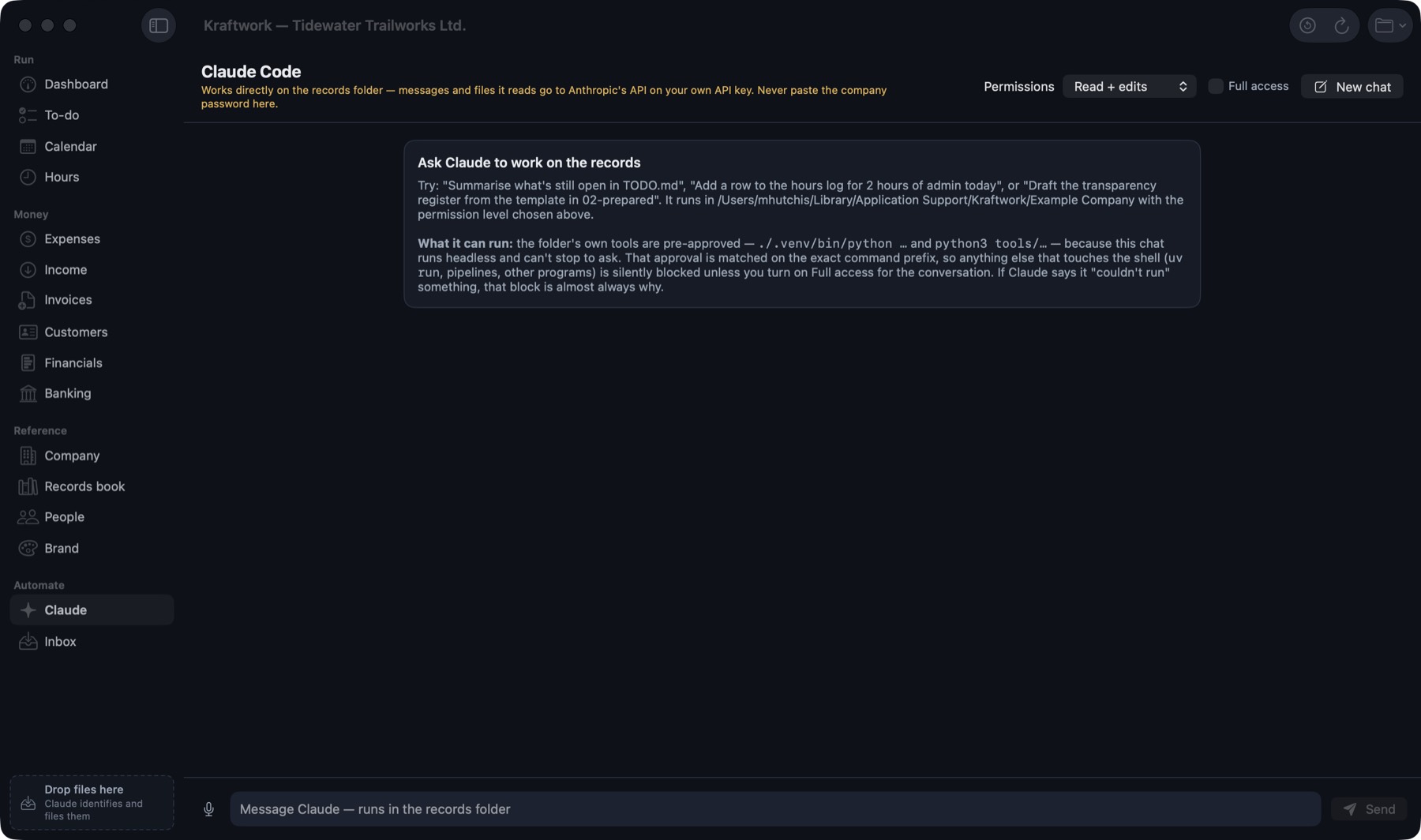
Kraftwork drives the Claude Code CLI on your own Mac, one process per message, in the records folder. Nothing is proxied through us — it talks to Anthropic directly, billed to you.
If you don't have it: npm install -g @anthropic-ai/claude-code. The app finds it from there.
Plan only, read and edits, or full access — set before you ask, and shown while you work.
The folder's own scripts are allowed; anything else touching the shell is blocked, matched on the exact command prefix.
Anything with a consequence comes back as a change to approve, in a file you can read.
Your records hold legal names, an address, bank rows and what everyone was paid — and today, asking about any of it sends that text to Anthropic. Point Kraftwork at an OpenAI-compatible server on your own machine instead — Lemonade, Ollama, LM Studio — and the whole loop stays on your desk.
Why it's built this way
A row in a CSV or a heading in a markdown file — readable if the app is gone. No database, no server, no export button needed.
Every automatic step stops one move short of changing your books. The agent proposes; a person approves.
Syncs over iCloud, or anything else that syncs files. Simultaneous edits are detected and shown, not silently lost.